



The core difference lies in architecture.
Traditional ERP systems are monolithic, all-in-one suites designed for centralized control. Postmodern ERP systems use a modular, cloud-native approach that connects 'best-of-breed' applications from multiple vendors.
Meanwhile, Modern Integrated ERP systems like Odoo combine the flexibility of modular design with the simplicity of an all-in-one platform from a single vendor. Learn more about Odoo ERP implementation.
This guide compares their architecture, costs, flexibility, analytics, and implementation timelines to help you determine which ERP strategy fits your business goals.
Postmodern ERP only works when your core platform connects seamlessly to specialist tools — see how Cudio handles Odoo third-party API integration for postmodern ERP architectures without creating new data silos.
Key Takeaways
- Postmodern ERP systems offer flexible, cloud-based, and modular architectures that enhance scalability and adaptability, contrasting with the rigidity and high costs of traditional ERP systems.
- Traditional ERP systems provide comprehensive functionality and centralized data sharing but face challenges such as high implementation costs, inflexibility, and integration difficulties with modern technologies.
- Transitioning to postmodern ERP systems necessitates strategic planning, effective change management, and careful vendor selection to ensure successful implementation and alignment with business goals.
What Is a Traditional ERP System?

A Traditional ERP system is a monolithic, all-in-one software suite where all business modules share a single, hard-coded database. Originally coined by Gartner in the 1990s, this architecture forces functions like finance, HR, and supply chain to operate within the same rigid code base and interface. While this ensures data consistency, it creates a 'single point of failure' where upgrading one module often requires shutting down the entire system.
This setup was the gold standard for decades. Legacy ERP systems gave companies structure and control, especially in large organizations. Today, they still account for about 35% of North American ERP revenue, indicating that many businesses still rely on them.
But traditional ERP isn’t without challenges. It’s often expensive and slow to roll out. 64% of projects go over budget, and only 49% go live on time. Customizations can be complex, and integrating with newer technologies is harder due to vendor-delivered integration and rigid architecture.
Many companies also struggle to update their existing legacy systems. As a result, they end up with outdated tools that don’t support modern business needs.
Still, traditional ERP systems work well for companies that need a stable, centralized system and don’t require much customization. But as more businesses shift their technology strategy, newer options, such as modern or postmodern ERP systems, are becoming increasingly appealing for their speed, flexibility, and lower risk.
What Is a Postmodern ERP System?
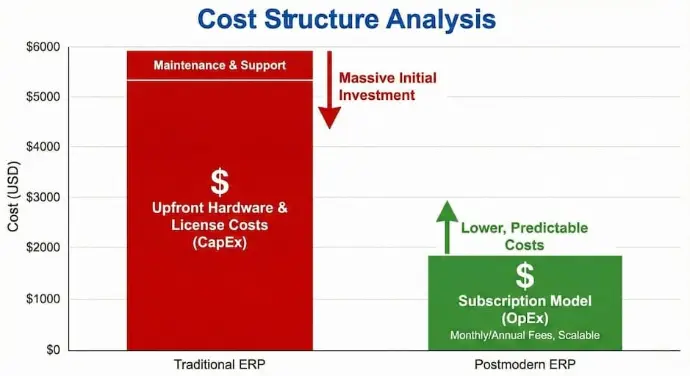
Adoption of postmodern strategies is surging due to superior usability. A 2024 survey by GrowCFO indicates that 76% of finance leaders prefer postmodern systems specifically for their intuitive, modern interfaces. This user preference directly correlates to faster onboarding times compared to the steep learning curves of legacy screens.
Financially, the postmodern approach significantly reduces long-term expenses. By eliminating massive upfront hardware costs and allowing modular licensing, businesses typically realize a 20–30% lower Total Cost of Ownership (TCO). This shift from CapEx to OpEx allows companies to reinvest savings into innovation rather than server maintenance.
Unlike legacy systems, postmodern ERP lets you pick and choose the best tools from different vendors and connect them into one streamlined environment. This makes it easier to align with evolving business needs and manage ERP strategies more effectively.
Flexibility is one of the most significant benefits. 93% of adopters say postmodern ERP provides greater flexibility, and over 80% of CFOs report improved integration and real-time analytics. With modular setups, companies can also avoid vendor lock-in and adapt more quickly to industry changes or expansions.
Postmodern ERP is beneficial for businesses looking to improve agility, cut costs, and enhance their overall technology strategy, without being tied down by existing legacy systems.
How Do Architectures Differ Between Traditional and Postmodern ERP?
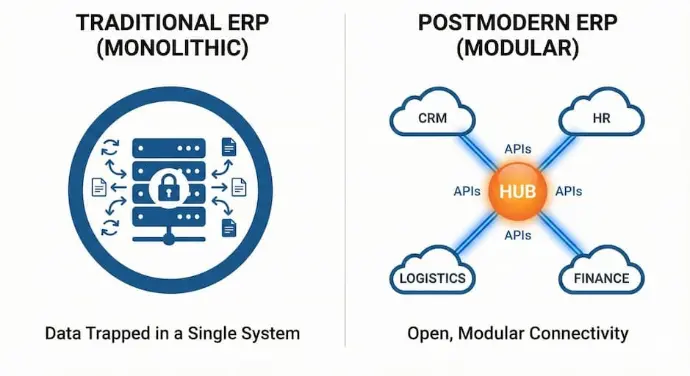
As businesses evolve, the conversation around postmodern ERP systems vs traditional ERP systems becomes more than just a technical debate. It's a strategic decision that shapes how you adapt, grow, and operate.
Let’s break down how these two ERP approaches compare in terms of architecture, customization, cost, and data capabilities.
Architecture and Flexibility
Traditional ERP systems are typically monolithic. All core functions like finance, human resources, and supply chain live in one centralized system. While this setup brings consistency, it limits flexibility. Businesses often face tight restrictions when integrating third-party software solutions or making changes to individual components. In fact, 70% of organizations report integration challenges with legacy ERP systems and existing legacy systems.
On the other hand, postmodern ERP systems are built on modular, API-enabled frameworks. This approach supports a postmodern ERP strategy, enabling companies to adopt best-of-breed applications rather than rely on a single vendor’s full stack. Businesses can choose the most suitable tools for each department, forming a flexible integrated suite tailored to their operations.
These cloud-based platforms offer 93% greater flexibility in scaling and evolving ERP capabilities. Updates can be rolled out in weeks, rather than the longer deployment cycles seen with traditional systems.
Customization and Scalability
Customization in traditional ERP usually requires vendor involvement. 80% of projects need external support to make changes, which drives up costs and delays. Because these systems are tightly coupled, scaling one area often impacts the entire system, making growth difficult.
With postmodern ERP platforms, companies can customize more easily. Thanks to plug-and-play modules, scaling is more focused. For example, a company can upgrade just its human resources or supply chain functionality without affecting other departments. This reduces customization time by up to 50% and lets teams focus on what they need most.
76% of users say they prefer postmodern ERP because it scales so easily without system-wide disruptions.
Cost and Implementation Time
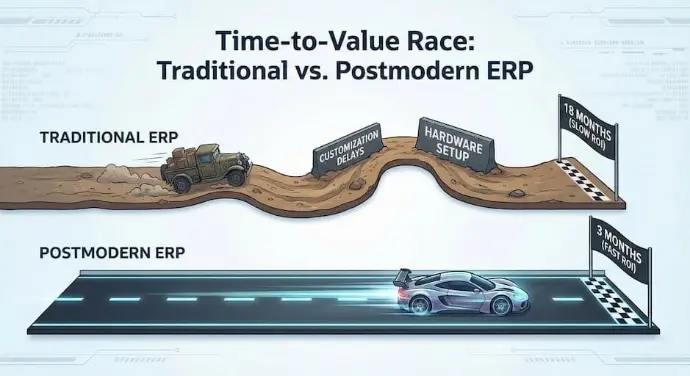
Traditional ERP implementations are resource-heavy. In the previously mentioned survey, 64% of projects go over budget, mainly due to staffing issues (38%), scope changes (35%), and technical obstacles (34%). On average, these systems take 6 to 18 months to go live, and only 49% are completed on time.
In contrast, modern ERP systems built on cloud infrastructure are quicker and more cost-effective. Postmodern systems use modular cloud components, allowing businesses to implement features in stages. This reduces upfront investment and spreads out implementation tasks over time.
These systems also deliver ROI faster. Postmodern ERP achieves returns in under 2 years, compared to the 3 to 5 years typical with traditional ERP. They also reduce the total cost of ownership by 20-30%, making them a smarter long-term investment.
Real-Time Access and Analytics
One significant gap in legacy systems is the lack of real-time visibility. Many businesses struggle to access up-to-date performance metrics because of disconnected data and limited integration capabilities. 60% of traditional ERP users say they face challenges with real-time access due to integration limits.
With postmodern ERP, this limitation is removed. Over 80% of CFOs using these systems report better analytics and real-time data insights across departments. These capabilities support better decision-making, especially when paired with machine learning, artificial intelligence, and predictive analytics.
In fact, postmodern systems can improve business process efficiency by 22% through smoother collaboration and faster data sharing across multiple departments.
Why Are Businesses Switching to Postmodern ERP Strategies?
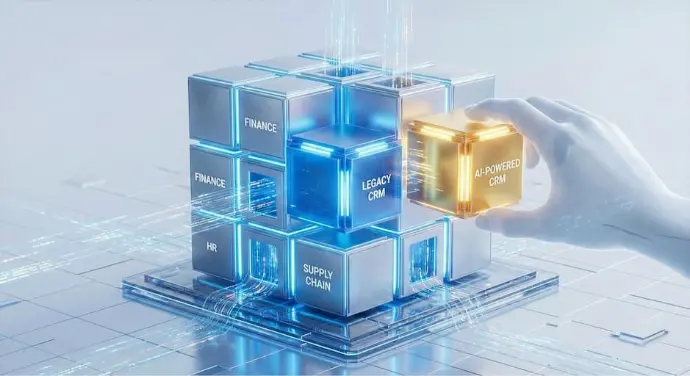
Switching to a postmodern ERP strategy isn’t just about replacing older software; it’s about reshaping how your business operates.
Postmodern ERP systems combine flexibility, intelligence, and speed, making them a smart fit for organizations facing rapid change, rising customer expectations, and complex operations. Here's what makes them stand out.
Improved Business Agility
One of the most significant benefits of postmodern ERP systems is greater business agility. Unlike legacy ERP systems, which require extensive reconfiguration to add new features, postmodern platforms are modular. This makes it easier to adapt to new requirements, whether that’s expanding into new markets, onboarding new teams, or shifting supply chain processes.
Companies can respond faster to change because each module in the ERP suite can evolve independently. There’s no need to wait for a vendor to release a full-system update. You can update what you need, when you need it.
Cost Efficiency
Postmodern systems are typically cloud-based, eliminating the high infrastructure and maintenance costs associated with traditional on-premises deployments. Because you can start with a few modules and add more over time, the investment is spread out and easier to manage.
They also reduce overhead by eliminating manual processes, repetitive tasks, and vendor lock-in. In fact, postmodern ERP reduces total cost of ownership by 20–30%. Faster ROI is also a big plus; most organizations see returns in under 2 years, while traditional ERP often takes 3 to 5 years.
Real-Time Insights and Analytics
With built-in business intelligence tools and access to real-time data, postmodern systems empower decision-makers across all levels. Finance teams can access historical data and live dashboards. Operations leaders can spot delays before they become significant issues. Sales and marketing teams can act on customer behavior trends faster than ever.
This level of visibility helps leaders react with confidence, supported by valuable insights rather than assumptions. No more waiting for end-of-month reports; the data is always live and ready.
Enhanced Integration and Flexibility
The postmodern ERP approach is built around best-of-breed thinking. Instead of locking into a single vendor’s full-stack system, you can select the best tool for each job, like pairing a powerful CRM with specialized finance software, or integrating a custom inventory module.
Thanks to open APIs and cloud-native design, integration is smoother and faster. Whether you're connecting with external apps, internal databases, or external platforms, the system supports you. It also promotes easy linking between business units and departments, removing silos and boosting collaboration.
Built for Innovation
Modern businesses demand more than just basic data processing. With artificial intelligence, machine learning, and predictive analytics becoming standard in modern ERP solutions, postmodern systems help companies to stay future-ready.
These tools help automate processes, forecast trends, and optimize resource allocation based on live performance metrics. Combined with a cloud-based system, this opens the door to continuous innovation without the downtime or risk of traditional upgrades.
What Challenges Will You Face When Adopting Postmodern ERP?
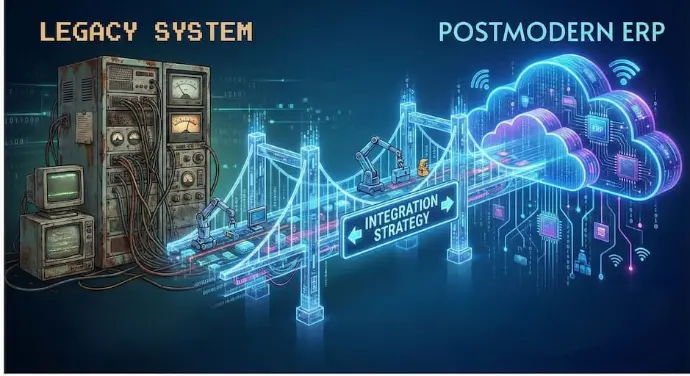
While the postmodern ERP approach brings agility, flexibility, and speed, the transition isn’t always simple.
Like any shift in technology strategy, moving from traditional ERP systems or legacy ERP requires careful planning, change management, and a deep understanding of your current operations. Here are the key challenges to watch out for.
Integration with Existing Legacy Systems
One of the most common hurdles is connecting new, modular platforms with existing legacy systems. Many businesses still rely on older ERP solutions that are tightly coupled and built on outdated architectures. This can lead to integration issues, data inconsistency, and slower implementations.
In fact, 70% of organizations report integration challenges with legacy ERP systems, especially when merging cloud-based modules with on-premises systems.
To overcome this, a phased migration strategy is essential, one that prioritizes high-impact areas like human resources, finance, or supply chain first, while gradually retiring legacy modules.
Change Management and Team Adoption
Even the best ERP strategies can fail if your team isn’t entirely on board. Postmodern ERP introduces new tools, workflows, and responsibilities that require employee buy-in. It’s not just a new system, it’s a new way of working.
To manage this, businesses must invest in clear communication, training, and change leadership from day one. Without this, resistance can slow adoption and reduce ROI.
Vendor and Platform Selection
Because postmodern ERP is built around best-of-breed solutions, you’ll need to choose multiple tools that can work together, finance, CRM, inventory, analytics, and more. This freedom is powerful, but it also introduces complexity.
If one piece doesn’t integrate well with the rest of your ERP suite, it can cause data silos, reporting issues, or duplicate business processes. You’ll also want to avoid platforms that require vendor-delivered integration, as this can lead to dependencies or cost creep.
A solid integration capability plan, including open APIs and clear data flows, is key to long-term success.
Security and Data Governance
With a modular, cloud-based ERP setup, data moves between multiple systems and platforms. This flexibility demands a stronger approach to security, compliance, and data governance.
You’ll need clear policies for user permissions, data ownership, and backup management across all modules. Working with a provider that understands both cloud infrastructure and business needs can reduce these risks and ensure compliance from the start.
Customization Limits
While postmodern ERP platforms offer faster configuration and better flexibility, deep customizations may still require third-party development or expert support. Not all modules are equally adaptable, and some software solutions may not allow for low-code changes.
Still, postmodern systems reduce the need for heavy customization up front. With plug-and-play modules, businesses can often get 80% of their needs met out of the box — and build the remaining 20% as their strategy evolves.
Quick Comparison: Traditional vs. Postmodern ERP
Choosing between traditional and postmodern ERP systems depends on your goals, business model, and the speed of your adaptation. Let’s break it down by key factors to help you understand what works best for your needs.
Architecture and Flexibility
Traditional ERP platforms are monolithic; all modules are tightly integrated into a single, extensive system. This design is stable, but makes any change slow and expensive. In fact, 70% of companies with legacy systems report integration challenges when updating or expanding their systems.
Postmodern ERP is built differently. It’s modular, with open APIs that let you mix best-of-breed applications into a flexible system. You can scale specific areas, such as human resources or supply chain, without affecting the rest.
- Postmodern ERP allows 93% greater flexibility for scaling and updates
- Updates happen in weeks instead of months
- Enables greater business agility and responsiveness
Customization and Scalability
Customizing traditional ERP systems usually requires vendor assistance, which slows timelines and increases costs. 80% of conventional ERP changes require vendor support, making even minor tweaks a big deal.
Postmodern ERP systems offer plug-and-play flexibility. You can add modules as needed and tailor them to individual business units or departments.
- Postmodern ERP reduces customization time by up to 50%
- 76% of users say postmodern ERP makes scaling easier without disruption
This agility supports dynamic businesses with complex or evolving needs.
Cost and Implementation Time
Legacy ERP rollouts are lengthy and expensive. On average:
- 64% of traditional ERP projects exceed budget, mainly due to staffing, scope creep, and tech issues
- Only 49% of projects go live on time
- Traditional implementation takes 6 to 18 months
By contrast, postmodern ERP systems lower risk and speed up time-to-value:
- Cut total cost of ownership by 20–30%
- Achieve ROI within 2 years (compared to 3–5 years for traditional)
- Modular components make implementation faster and more focused
Real-Time Access and Analytics
Traditional systems often struggle with real-time visibility. Data updates are slow, and integration limitations prevent cross-functional insights.
With postmodern ERP platforms, data flows freely between tools, finance, CRM, and inventory, giving you:
- Better business intelligence
- Faster reporting
- More accurate forecasting
Over 80% of CFOs using postmodern ERP say they now get real-time insights and stronger analytics. Businesses also report a 22% boost in process efficiency through better system integration.
So, which system wins?
Factor | Traditional ERP | Postmodern ERP |
Architecture | Monolithic | Modular, API-driven |
Customization | Vendor-dependent | Plug-and-play |
Implementation Time | 6–18 months | Weeks to months |
Cost | High upfront, slow ROI | Lower TCO, fast ROI |
Flexibility | Limited | High |
Analytics | Often delayed | Real-time insights |
Scalability | Difficult | Easy and targeted |
Postmodern ERP isn’t just a new trend; it’s a more brilliant ERP strategy for modern, fast-moving businesses. Whether you’re upgrading legacy ERP systems or starting fresh, this approach aligns better with today’s operational efficiency demands.
What Are the Core Features of a Postmodern ERP?
Postmodern ERP systems stand out by offering modularity, cloud-native architecture, and advanced technologies that support faster decision-making, better integrations, and scalable operations.
These features make postmodern ERP platforms more adaptive to today's dynamic business environment.
Modular, Cloud-Based Architecture
Unlike traditional monolithic ERP suites, postmodern systems are built with modular ERP solutions. This allows businesses to implement only the features they need, whether for supply chain, human resources, or finance, and expand over time.
- Built on cloud-based systems that enable faster deployments and updates
- Supports best-of-breed applications without needing to replace an entire system
- Delivers greater business flexibility with reduced vendor dependency
With the cloud ERP segment projected to reach $181.04 billion by 2032 at a 15.5% CAGR, more companies are choosing modular systems to scale quickly and control costs.
AI, Machine Learning, and Predictive Analytics
Today’s modern ERP systems go beyond data tracking. They use artificial intelligence, machine learning, and predictive analytics to help businesses automate and optimize.
- Automates repetitive tasks like invoice matching or demand forecasting
- Offers real-time insights into market trends and internal performance
- Helps shift from reactive to predictive operations
These technologies support a forward-thinking technology strategy that gives decision-makers access to valuable insights based on both real-time and historical data.
Integrated, Yet Decentralized Design
Postmodern ERP emphasizes flexibility while maintaining centralized visibility. While different modules can operate independently, they integrate easily to support connected business processes.
- Links both administrative and operational functions through APIs
- Easily integrates with CRMs, eCommerce tools, and software solutions
- Enables multiple departments to share data without forcing everyone onto one rigid system
This modular yet connected approach helps reduce the pain points often associated with legacy ERP systems and vendor-delivered integration.
User Experience and Accessibility
User adoption is often a hurdle for complex ERP applications. Postmodern systems address this by focusing on accessibility and ease of use.
- Clean interfaces and customizable dashboards improve usability
- Mobile-friendly platforms support a remote and distributed workforce
- Real-time alerts and collaborative tools enhance responsiveness
This shift toward user-friendly design supports faster onboarding and more effective usage across all business units.
Designed for Growth
Postmodern ERP systems are built to evolve. As your needs change, the system can scale and adapt without disrupting operations.
- Easily integrates emerging tools like ESG trackers or new analytics modules
- Supports best-of-breed solutions tailored to specific industries or functions
- Allows organizations to grow without rebuilding their entire ERP suite altogether
This scalability is essential for businesses navigating change or managing complex operational requirements.
How Do You Plan a Successful ERP Transition?
Shifting from a traditional ERP model to a postmodern approach is more than a technology upgrade. It’s a business decision that requires thoughtful strategic planning, alignment with long-term goals, and a partner who understands both software applications and operations.
Evaluate Your Specific Business Needs
Every business is different, so your ERP journey should begin with a full understanding of your current systems, pain points, and plans. Are your teams working with legacy ERP systems that no longer support growth? Do you rely on an on-premise suite that can’t scale across multiple locations?
Key signs it's time to rethink your ERP strategy:
- You’re juggling disconnected systems that don’t integrate seamlessly
- Your legacy systems are slowing down performance and visibility
- You need better coordination across multiple departments
- You want to reduce costs and increase operational efficiency
Understanding these gaps helps guide the shift toward a postmodern ERP strategy that supports agility, data access, and faster decision-making.
Aligning ERP with Business Strategy
Your ERP setup should align with your broader technology strategy and performance goals. Cloud-based modern ERP systems and postmodern platforms offer advantages like scalable infrastructure, simplified updates, and reduced overhead.
For businesses with a broad geographical reach, fewer physical resources, or complex business processes, modular, cloud-based systems allow better support and control. They replace rigid legacy ERP with a flexible framework that adjusts to change.
A postmodern ERP approach also supports best-of-breed applications, letting you choose tools that match your specific business functions rather than relying on a single mega vendor.
Managing Change Across Departments
ERP transitions involve people as much as platforms. Implementing a new system affects business units across sales, finance, supply chain, and human resources.
Change management should include:
- Involving department leads in planning
- Communicating clear goals
- Training teams based on real workflows
- Setting success metrics from the start
This ensures a smooth adoption and that the ERP rollout delivers measurable improvements.
At Cudio, we’ve built our services on experience inside the industries we now support. Our consultants aren’t just ERP experts; they’re former COOs, GMs, and Operations Managers who have led ERP rollouts themselves.
We specialize in helping businesses move away from legacy ERP systems and toward modular, cloud-based ERP solutions using Odoo. This flexible platform supports real-time data, best-of-breed tools, and postmodern strategies.
Here’s how we make transitions work:
- We assess your existing legacy systems and identify the best ERP suite altogether for your needs
- We reduce risk by mapping every step with clear timelines and integration plans
- We connect all your tools into one integrated suite, from finance to supply chain
If your team is ready to reduce technical debt, improve cross-department visibility, and gain true business flexibility, we’ll help you get there without the stress of starting from scratch.
Book Your FREE ERP Strategy Today!
Summary
The move from traditional to postmodern ERP systems reflects a significant shift in how businesses manage operations. Traditional ERP offers stability and control but can be costly, rigid, and slow to adapt. Postmodern ERP offers flexibility, modular design, and faster innovation, making it ideal for businesses that need agility and real-time insights.
Choosing between the two isn’t about what’s newest, but what fits your business best. The right solution depends on your processes, goals, and readiness for change.
At Cudio, we help businesses make ERP decisions that work in practice, not just in theory. With hands-on experience and deep expertise in both traditional and postmodern systems, we’ll guide you toward a setup that supports long-term growth.
Let’s build a system that fits the way your business truly works.
Book Your FREE ERP Strategy Today!
Frequently Asked Questions
Have questions about postmodern ERP systems vs. traditional ERP systems? Don’t worry, our team at Cudio is here to help.
What are the main differences between traditional and postmodern ERP systems?
The main difference between traditional and postmodern ERP systems lies in their structure; traditional systems are monolithic and centralize data management, whereas postmodern systems are cloud-based, modular, and offer enhanced customization and scalability. This flexibility in postmodern systems better adapts to evolving business needs.
How long does it take to implement a postmodern ERP system compared to a traditional ERP system?
Implementing a postmodern ERP system typically takes weeks to months, significantly quicker than the 6 to 36 months required for traditional ERP systems. This expedited timeline enables faster deployment and earlier benefit realization.
What are the benefits of integrating AI and machine learning in postmodern ERP systems?
Integrating AI and machine learning into postmodern ERP systems significantly boosts operational efficiency and decision-making capabilities through real-time data processing, predictive analytics, and process automation, yielding deeper analytical insights. This technological advancement enables organizations to adapt swiftly and effectively to changing market conditions.
What challenges do companies face when transitioning to postmodern ERP systems?
Companies transitioning to postmodern ERP systems face challenges such as complex integration, risks to data consistency, and the need for effective change management to align stakeholders. Addressing these issues is crucial for a successful transformation.
How does cloud-based infrastructure benefit postmodern ERP systems?
Cloud-based infrastructure significantly benefits postmodern ERP systems by enhancing collaboration, reducing initial and ongoing IT costs, and enabling scalability to adjust resources to business needs. This adaptability enables organizations to operate more efficiently and cost-effectively.